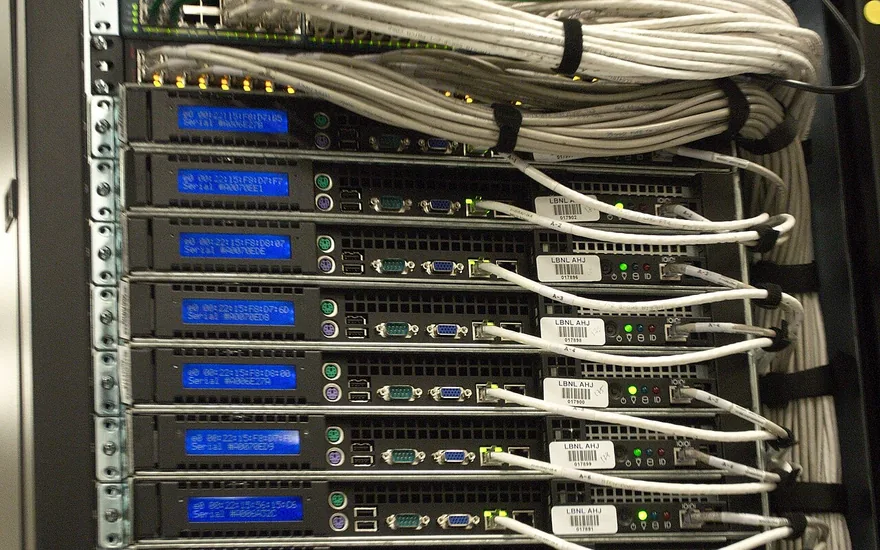
Bare metal hosting gives you an entire physical server with no hypervisor on top of it. Nothing is shared, so there is no neighbour taking your CPU, no virtualization overhead between your workload and the silicon, and disk I/O goes straight to the NVMe controller.
MoradoSolution bare metal servers run on AMD EPYC 7C13 with DDR4 ECC memory and NVMe Gen 4 storage in our own Delhi data centre, with a 10 Gbps uplink, unmetered bandwidth, three IPv4 addresses and always-on DDoS filtering included. Every machine is provisioned automatically and arrives with full root access, so you can install any operating system, hypervisor or custom build.
How much does a bare metal server cost in India?
Bare metal starts at ₹4,999 per month for 12 cores with 32 GB RAM and 500 GB NVMe. The 64 GB configuration is ₹7,499 with 18 cores and 1 TB of NVMe, the 128 GB configuration is ₹9,999 with 28 cores and 2 TB, and the largest is ₹15,999 per month for 64 cores, 256 GB RAM and 3 TB NVMe. Prices are in INR with no forex charge on international cards.
| Configuration | Cores | RAM | NVMe | Price |
|---|---|---|---|---|
| Entry | 12 | 32 GB | 500 GB | ₹4,999/mo |
| 64 GB | 18 | 64 GB | 1 TB | ₹7,499/mo |
| 128 GB | 28 | 128 GB | 2 TB | ₹9,999/mo |
| Top-end | 64 | 256 GB | 3 TB | ₹15,999/mo |
How does bare metal compare with a VPS?
A VPS is the cheaper choice for websites, APIs, development boxes and containers: it starts at ₹676 per month and resizes in a click. Bare metal is worth the jump when the workload needs the whole machine, such as running your own hypervisor, a large database that wants direct disk access, or sustained CPU and network work that would fight a neighbour on shared cores.
Between the two sits the VDS range, which reserves dedicated cores without handing you the whole machine. It is the right middle step when guaranteed cores are enough but you do not need bare silicon.
When bare metal is worth the money
- You are running a hypervisor. If you want to hand the machine to Proxmox, KVM or VMware yourself, nesting a hypervisor on top of a shared VPS is where the overhead starts to bite.
- Your database wants the disk. Direct NVMe access removes the virtual disk layer, which matters most for write-heavy and latency-sensitive workloads.
- CPU is saturated for long stretches. Build servers, rendering and video processing do not care about bursty credit, they want the whole socket.
If you are still deciding, the VDS, VPS and bare metal comparison walks through the trade-off in detail, and the infrastructure page has the full hardware and network detail.